Choosing between a diesel forklift and an electric forklift is not simply a matter of price or brand preference. The right choice depends entirely on your specific working conditions, including where the machine will operate, how many hours per shift it will run, what type of loads it will handle, and what environmental regulations apply at your site. Many buyers ask us which one is better, but the honest answer is that neither is universally better. Each has its own strengths, and understanding those strengths is the key to making a smart investment.
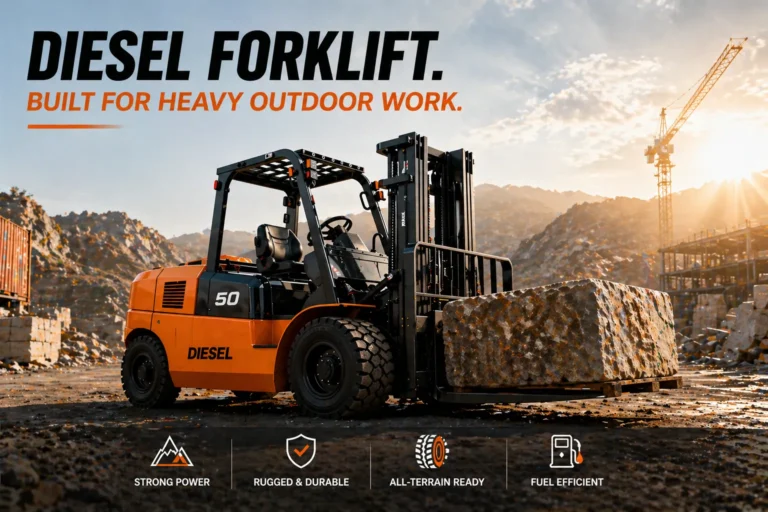
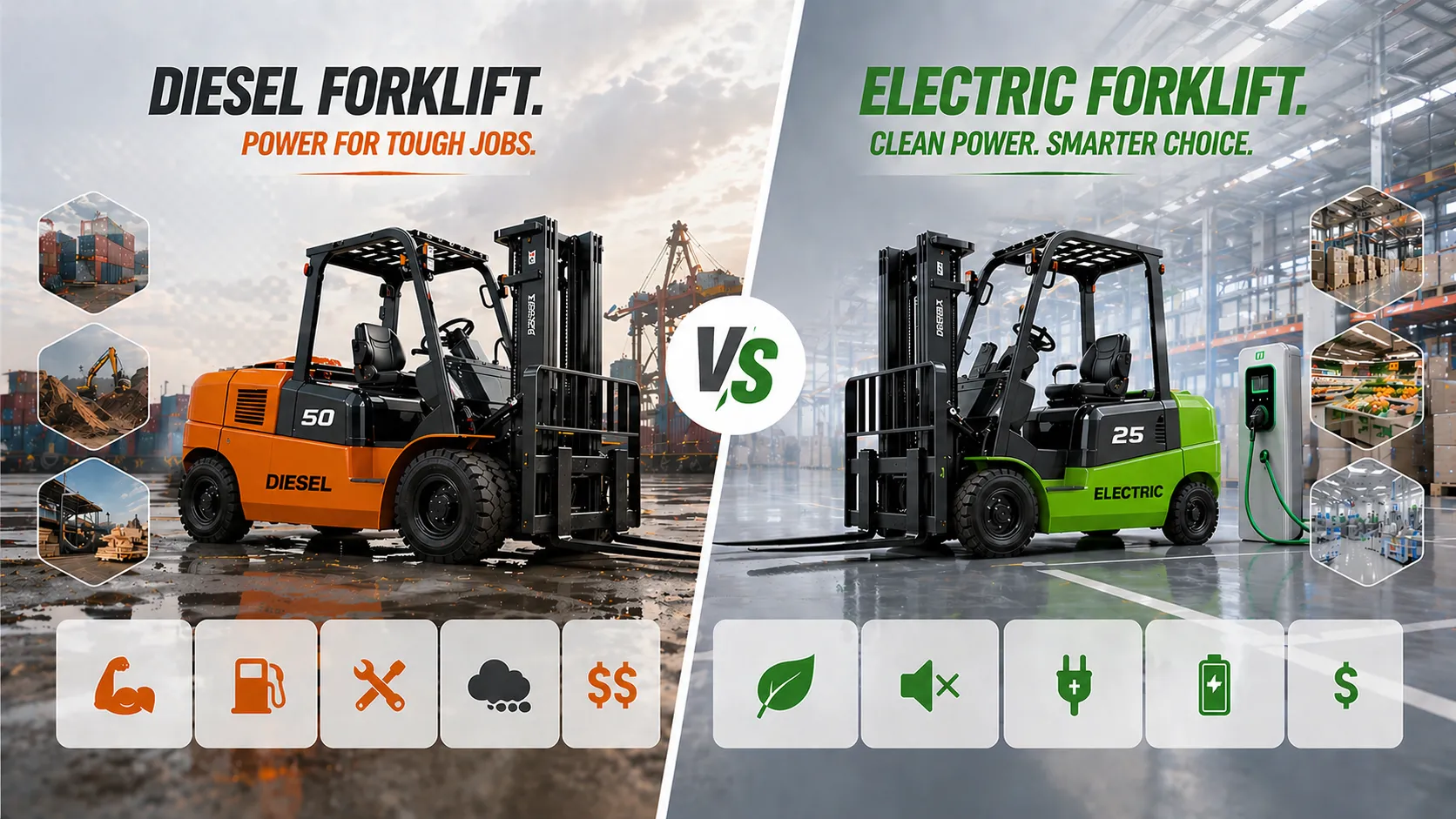
Let us start with diesel forklifts. These machines are powered by internal combustion engines, and we build them to be compatible with nine engine brands including Xinchai, Cummins, Kubota, and Isuzu. The main advantage of a diesel forklift is strong power output and excellent endurance. Diesel engines deliver high torque at low speeds, which makes them ideal for heavy loads, rough terrain, and continuous operation across long shifts without performance loss. If your application involves outdoor work in rain, mud, dust, or extreme heat, a diesel forklift can operate reliably in these demanding conditions. They are also quick to refuel, requiring only a few minutes to return to operation. For ports, construction sites, lumber yards, recycling centers, and any environment with uneven or unpaved ground, diesel remains a highly practical solution.
However, diesel forklifts also have clear limitations. They produce exhaust emissions and higher noise levels, which makes them unsuitable for indoor or poorly ventilated environments. In many regions, especially the European Union, strict emission regulations also limit where diesel equipment can be used. In addition, fuel consumption and engine maintenance increase the long-term operating cost. For these reasons, we typically recommend diesel forklifts for customers whose operations are primarily outdoors, require long continuous working hours, and are located in regions with less restrictive emission requirements.
Now let us turn to electric forklifts. These machines run on advanced electric drive systems and high-capacity batteries, and they are becoming increasingly popular across modern logistics industries. The most significant advantage is zero emissions and low noise operation. Electric forklifts can work safely indoors, in warehouses, cold storage facilities, and any environment where air quality and noise control are important. They also have lower maintenance requirements, since they eliminate engine-related components such as oil systems, filters, and fuel parts. Over time, this results in significantly lower operating costs compared to diesel models.
That said, electric forklifts are not suitable for every application. They require regular charging, which typically takes several hours, although opportunity charging during breaks can help extend working time. For multi-shift operations, additional batteries or charging infrastructure may be necessary. Electric forklifts also perform best on smooth, paved surfaces and are generally not designed for very rough outdoor terrain or extremely heavy loads above five to six tons. We usually recommend electric forklifts for warehouse logistics, indoor distribution centers, food and pharmaceutical industries, and any operation that prioritizes clean, quiet, and efficient material handling.
So how do you decide? Start by answering three questions. First, where will the forklift operate? If it is mainly indoors or in a mixed indoor-outdoor environment with smooth floors, electric is usually the better choice. If it is fully outdoor, especially on uneven or harsh ground conditions, diesel is more reliable. Second, how many hours per day will the forklift run? For continuous heavy-duty operation exceeding eight hours per shift, diesel or a well-planned multi-battery electric solution may be required. For standard or intermittent use, electric forklifts are often sufficient and more economical. Third, what are the local emission regulations? In regions with strict environmental standards, electric forklifts are often required for indoor use, while diesel models may be limited to approved outdoor applications.
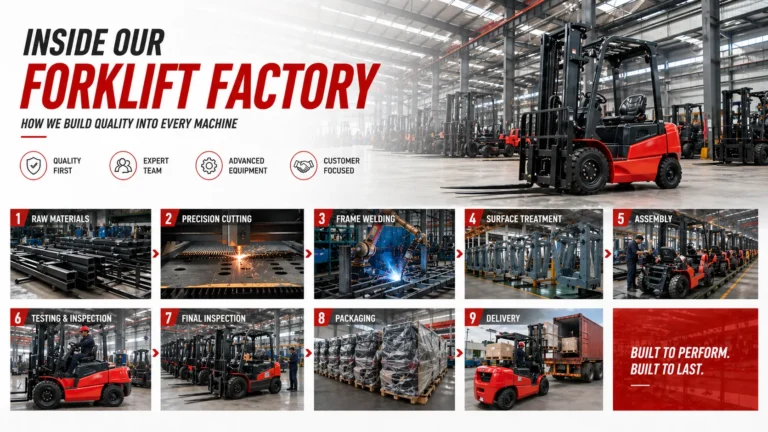
At our factory, we produce both diesel and electric forklifts and offer full customization in load capacity, lift height, mast configuration, and other specifications. We also support certification requirements such as CE, EAC, and SABER depending on the target market. If you are still unsure which type best fits your application, we can evaluate your working conditions in detail and provide a practical recommendation based on real operational needs rather than guesswork. Contact us with your requirements, and we will help you choose the right forklift for your job.